
Supporting the Whole Person

Cait Cleaver received holistic support as a student-athlete. As a professor, she offers the same to her students.
story by Bob Keyes
photos by Ashley L. Conti
Cait Cleaver received holistic support as a student-athlete. As a professor, she offers the same to her students.
story by Bob Keyes
photos by Ashley L. Conti
Cait Cleaver ’06

faced a dilemma during her senior year at Colby. She was struggling to stay on top of her capstone project in environmental studies, while the volleyball team she captained was dispatching opponents one after another en route to the program’s first NESCAC title and NCAA tournament bid.

Worried she wasn’t going to finish her project on time but not wanting to lessen her commitment to her team, she sought counsel from her capstone advisor, Philip Nyhus, the Elizabeth and Lee Ainslie Professor of Environmental Studies and chair of the Interdisciplinary Studies Division. “I remember sitting in his office, and he asked me, ‘What are you going to remember in 20 years—this report, or the fact that volleyball has been so incredible for you?’ He told me to focus on volleyball, and we’d wrap up the project later. Because Colby is a smaller community, you can support the whole person.”

Twenty years later and now an assistant professor of environmental studies, Cleaver keeps Nyhus’s message and advice top of mind when counseling her own students about academic issues, career decisions, or anything else. She knows what it’s like to be in their shoes.

“I tell my students, ‘I went here too.’”

Full-Circle Colby Story

Cleaver’s journey from volleyball captain to an assistant professor of environmental studies is a full-circle Colby story centered on her deep immersion in Maine’s coastal communities. As a self-described accidental academic with three master’s degrees and a Ph.D., she plugs the gap between high-level marine policy and the actual experiences of commercial fishermen. Her husband, whom she met through Colby Athletics when both served as assistant coaches for different teams, is a commercial fisherman who lobsters on a 40-foot boat out of Harpswell named after their two kids.

As an ecologist, Cleaver often works in the intertidal zone, a liminal space between the sea and the land. These spaces are not always simple but they are important, and rich with possibilities. So perhaps it’s not a surprise that she is comfortable in other kinds of liminal spaces, including those where the tide meets the town. Cleaver is able to blend marine ecology with social science, and looks at the future of Maine’s coastal restoration, fisheries, and aquaculture with a wide lens that includes the people who work on the coast as well as the species that live there.

As a marine scientist and wife of a lobsterman, she is in a sometimes delicate position of conducting research that might impact the livelihood of her husband’s fishing community and of families in their social circles. But being in that position also gives her unique standing among both fishing communities and her academic peers, as well as a vital perspective about the importance and impact of her work. She learned to live in this in-between space early in her career when she studied how right whales dive as a research technician for the Maine Department of Marine Resources. The research showed that whales tended to dive to the ocean floor and roll around, which meant the floating ropes that connected lobster traps at the bottom of the ocean posed entanglement risk.

A Private College for the Public Good

Economic Impact

The largest campaign at a liberal arts college, with more than $1 billion raised for Dare Northward and 32,000 individual donations.

Save the whales or save the fishery?

“That gave me a real sense of how complicated these issues are. I came from an environmentalist, very ‘protect- species-at- all-costs’ family. But then I’m talking to lobstermen who see themselves as stewards. It made me check my biases. To solve complex issues, you have to hear everyone’s side and find a compromise,” she said.
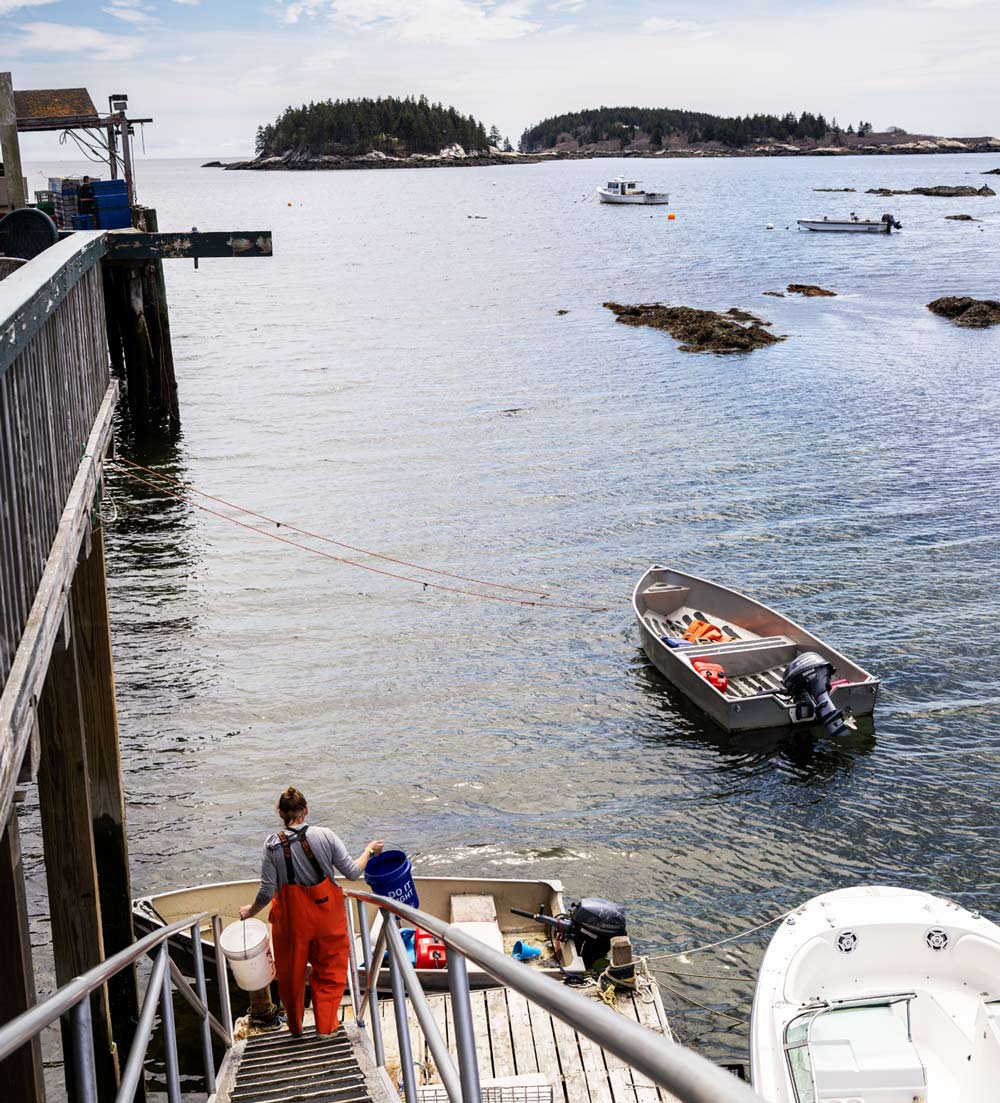
Cait Cleaver, wearing orange waders and holding buckets, walks down a ramp from a wooden dock toward the water. Motorboats and forested islands are visible in the background.
Cait Cleaver, assistant professor of environmental studies, navigates a steep dock ramp at low tide to fill buckets with seawater to process juvenile scallop spat bags at Maine Oyster Company in Phippsburg.

A Range of Research

In addition to right whales, over the course of her career she has studied the boom and bust of the green sea urchin fishery, the role of shellfish, the restoration of oyster beds, seaweed farming, and the possibilities of aquaculture in a changing environment. She has published widely about fisheries management, aquaculture adoption, and other topics.

Her involvement in the Basin Oyster Project at Phippsburg’s Basin Preserve is ongoing. With funding from the Maine Community Foundation and working with numerous local partners, Cleaver is monitoring two oyster restoration sites in the Basin, a sheltered saltwater inlet on the New Meadows River. Over a period of years, she and her students are exploring whether Maine’s warming ocean waters will enhance oyster growth and production, as well as the social-ecological factors involved.

Elsewhere in Phippsburg, at the Sprague Marsh in the Bates-Morse Mountain Conservation Area, she is working collaboratively with her colleagues at Bates College and members of the Wabanaki nations to find out if sweetgrass, whose native salt marshes are vulnerable to sea-level rise and the pressure of coastal development, can be successfully transplanted. If so, this could safeguard and increase the resilience of a species critically important to Indigenous culture.
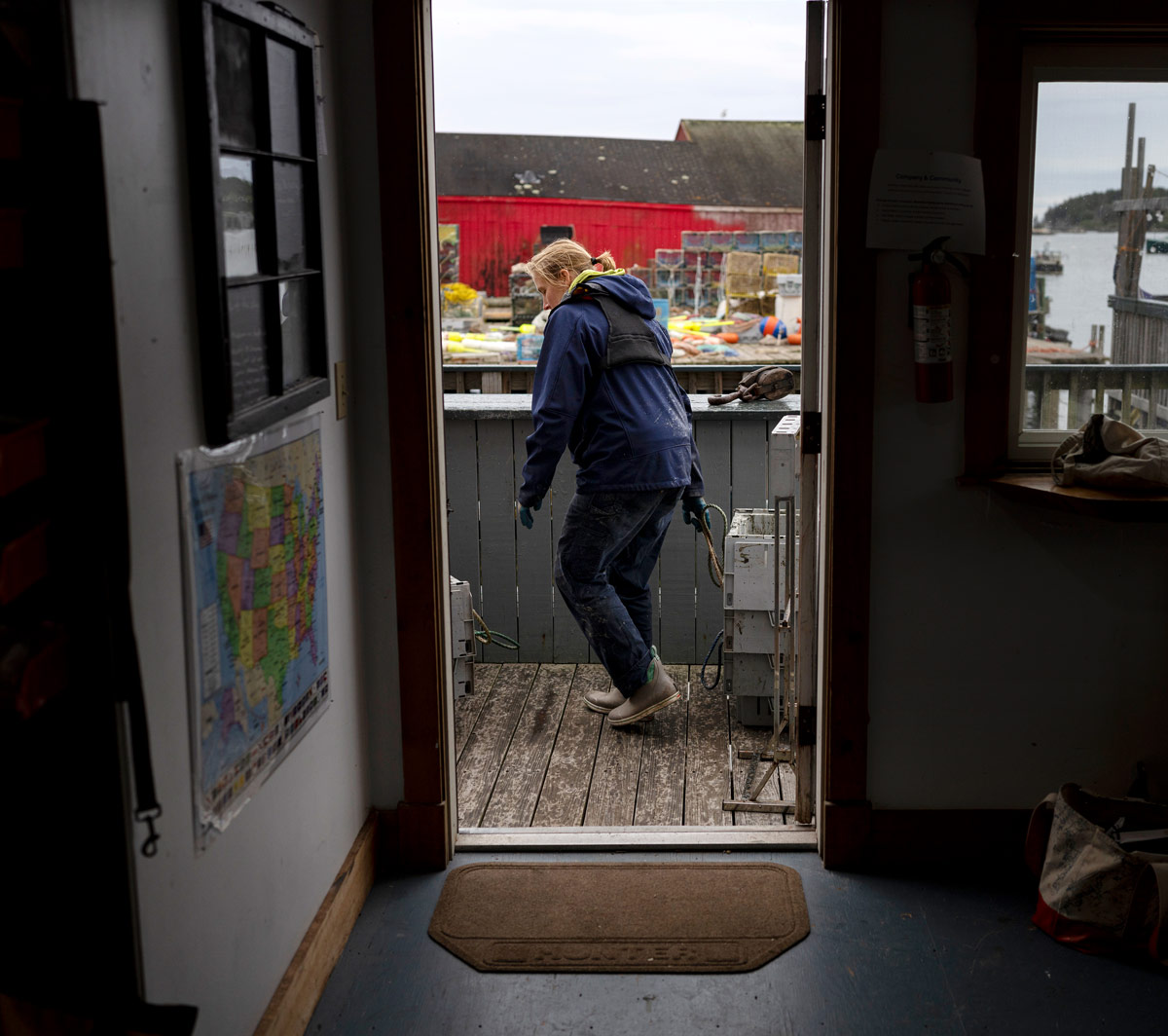
Seen through a dark doorway, Cait Cleaver walks across a wooden deck carrying plastic totes. A red building and stacked fishing traps are visible in the background.
Cait Cleaver carries empty totes from the dock in Phippsburg back to her vehicle.
Cleaver’s work centrally addresses the challenges and opportunities that face fisheries in Maine as the state considers how to handle key issues that impact the future of fishing in Maine. “She addresses topics both narrowly and broadly that are so important to Maine and beyond. She is truly interdisciplinary. She straddles the natural sciences and the social sciences,” said Nyhus. “And I say more broadly, because the skill set she brings—that ability to straddle interdisciplinary boundaries—is so important to these complex challenges.”

Further, he said, Cleaver embodies the kind of academic discipline and training that distinguish Colby scholars. She is loyal to Colby and loyal to her students just as she was loyal to her volleyball teammates when they won the NESCAC title 20 years ago, he said.

“She has the potential to be an incredible teacher here at Colby, just as she was an incredible athlete while at Colby,” Nyhus said. “All of us at Colby should be proud every time we hire one of our alumni. We have launched them into their careers and then they come back with new skills to pass on to the next generation of students.”

Finding Her Way Home

After graduating from Colby in 2006, Cleaver studied and worked in the field of environmental studies, including as a research assistant at the University of Maine and director of the Bates-Morse Mountain Conservation Area. She monitored commercial development in ecologically sensitive areas for the Natural Resources Council of Maine, worked as a policy coordinator at the Island Institute, and created a research program that involved high school students at the Hurricane

Island Center for Science and Leadership. While doing that work, she earned a master’s in public administration at Columbia University (“like an M.B.A. for the public sector— very practical”) and later added master’s degrees in marine policy and marine biology from the University of Maine.

She was finishing her Ph.D. at UMaine, focusing on aquaculture as a diversification strategy for fishermen, when the position in the Environmental Studies Department at Colby opened up. As a student, she was encouraged to follow her interests, instincts, and passions—in the classroom and on the volleyball court. Coming back as a professor has allowed her to develop those interests, become an expert, and encourage her own students to be fair-minded, passionate, and curious.

“I have always felt right at home in environmental studies,” Cleaver said, noting that Nyhus, who encouraged her commitment to volleyball when he was her professor and advisor, has an office next to hers and remains influential, now as a colleague and peer. “I love it here at Colby, and I have always loved it here. It’s like family.”
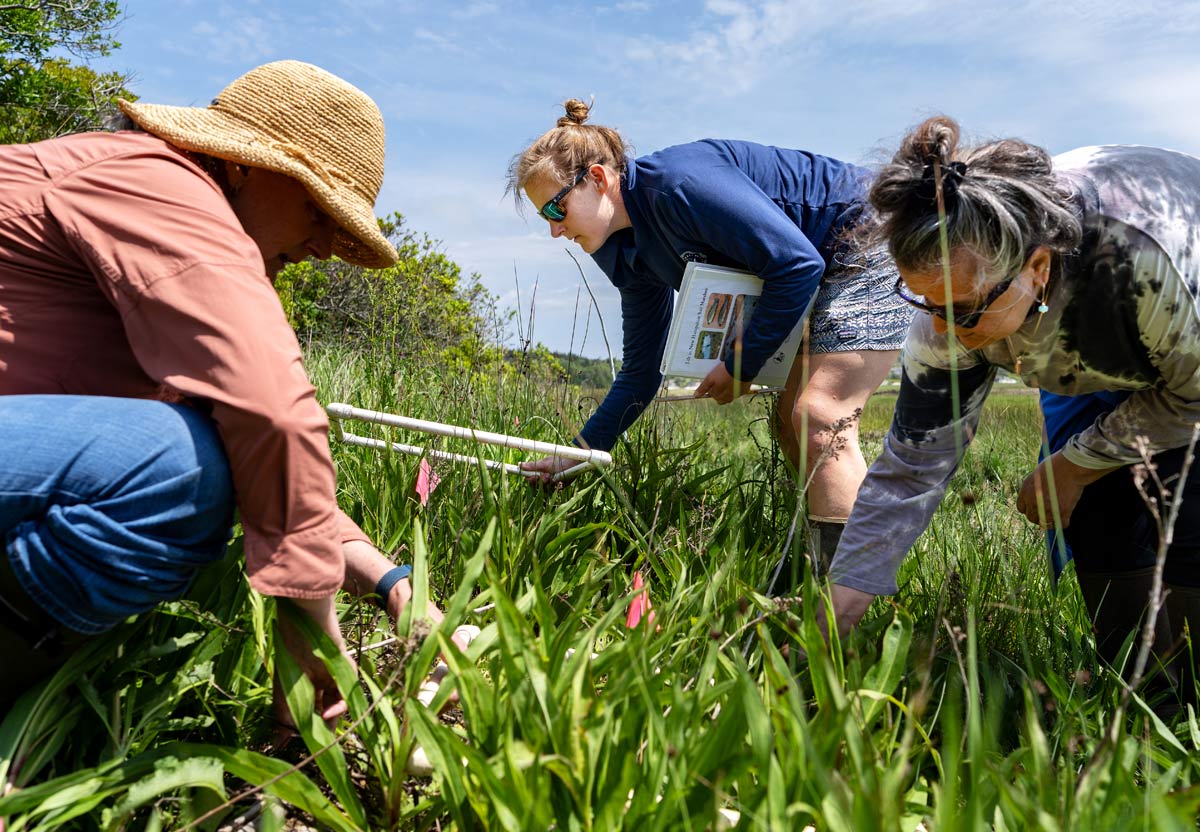
Cait Cleaver, Bev Johnson, and Natalie Michelle crouch in a grassy marsh. Cleaver places a white square PVC grid over a patch of grass to inspect it.
Cleaver’s coastal research spans several issues. At the Sprague Marsh in the Bates-Morse Mountain Conservation Area, also in Phippsburg, she is researching whether vulnerable sweetgrass can be successfully transplanted. Here, she lays a PVC grid over one of the 20 sweetgrass plugs to count plants in the plot with assistance from Natalie Michelle (right), a member of the Penobscot Nation, and Bev Johnson from Bates College.
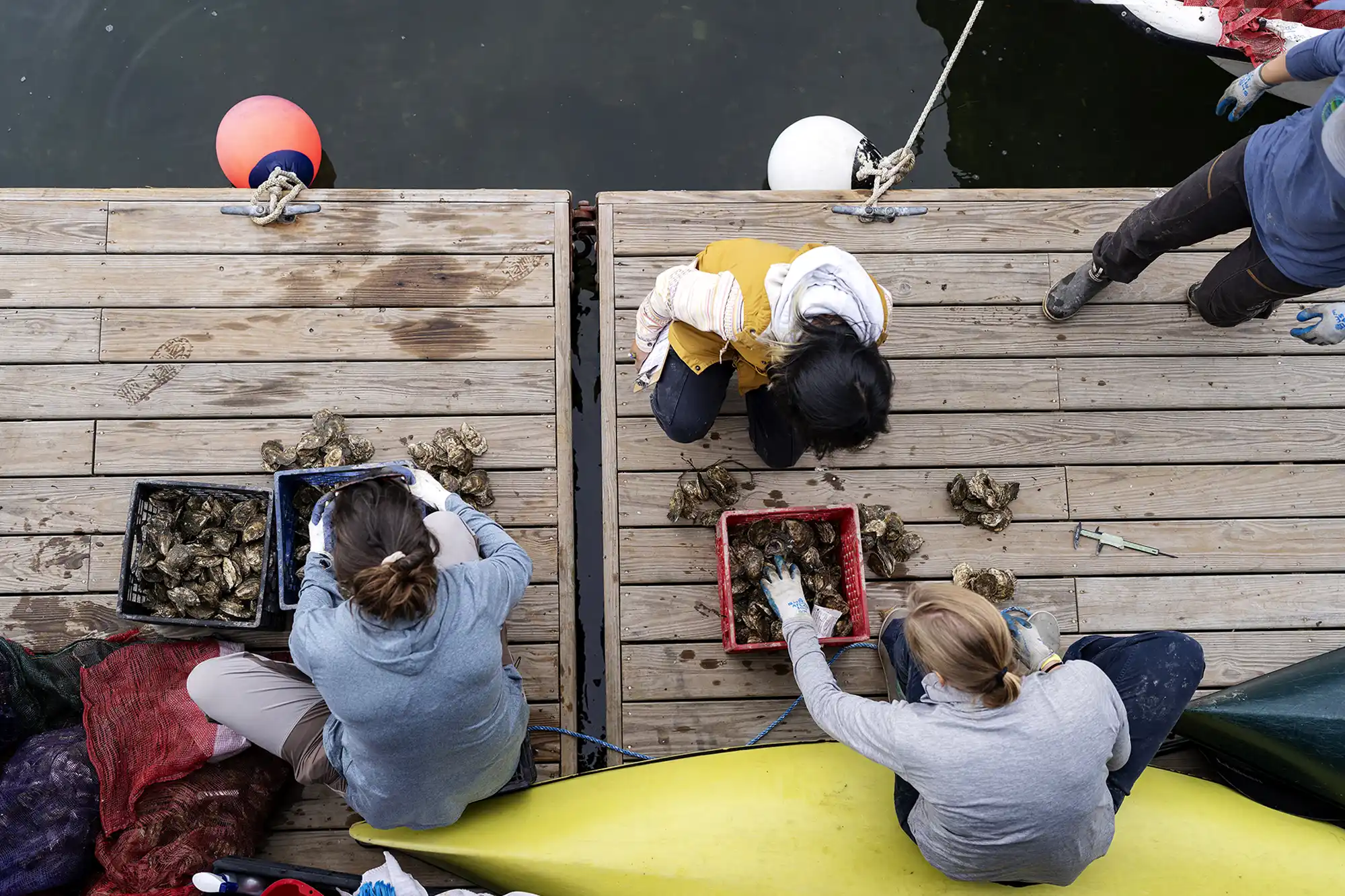
Overhead view of Helena Tatgenhorst, Maddy Lin, and Cait Cleaver kneeling on a wooden dock, sorting through piles of oysters in plastic crates next to water.

Helena Tatgenhorst (from left) from the Nature Conservancy, Maddy Lin ’25, an environmental policy and East Asian studies double major, and Cait Cleaver count and size oysters on the dock in Phippsburg as part of the Basin Oyster Project.
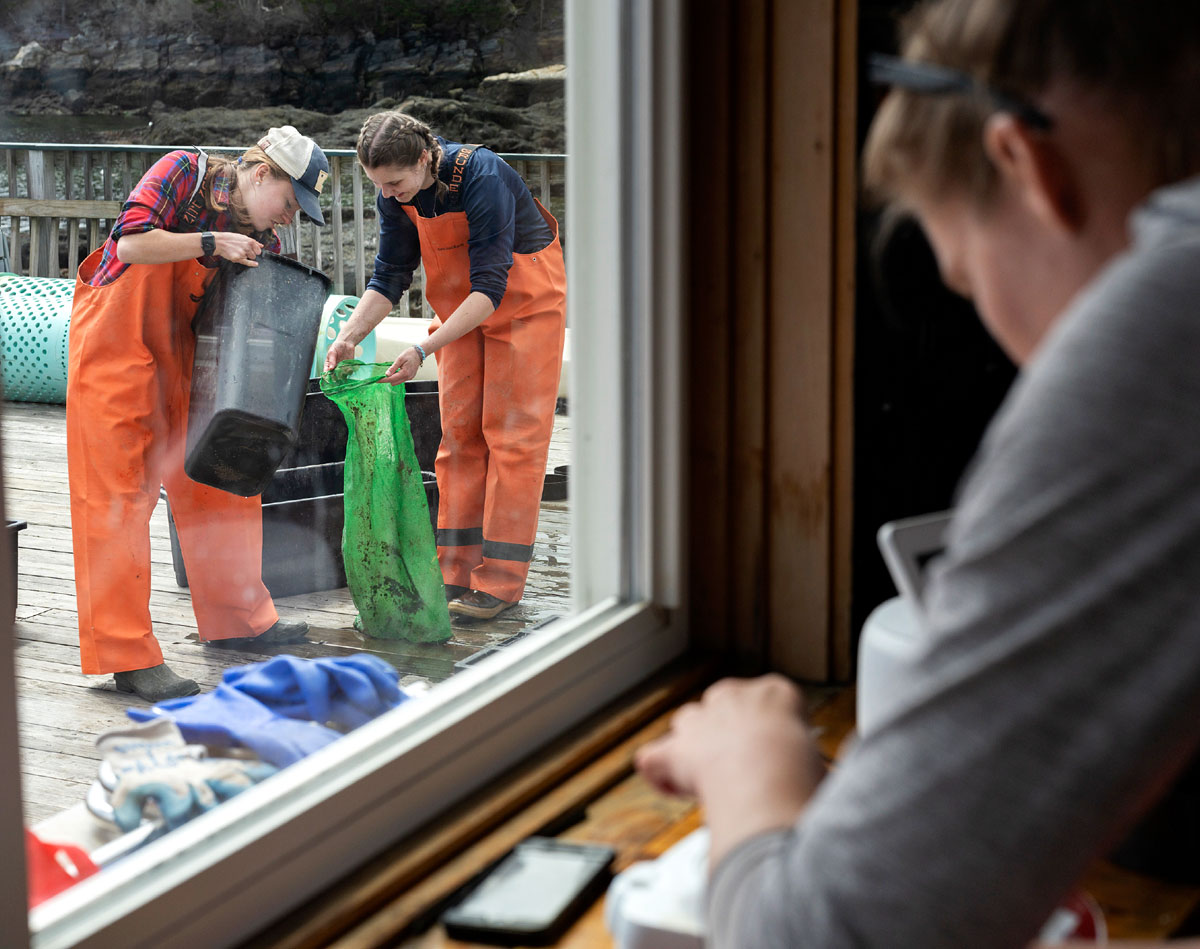
Framed by a window, Brynne Robbins and Kate Hanson wear orange waders on a dock, pouring items from a black container into a green mesh bag. Cait Cleaver is partially visible in the blurred foreground.
Brynne Robbins ’26, an environmental policy and government double major, and Kate Hanson ’26,an environmental science and classical civilization double major, process juvenile scallop spat bags, while Cait Cleaver counts scallops.
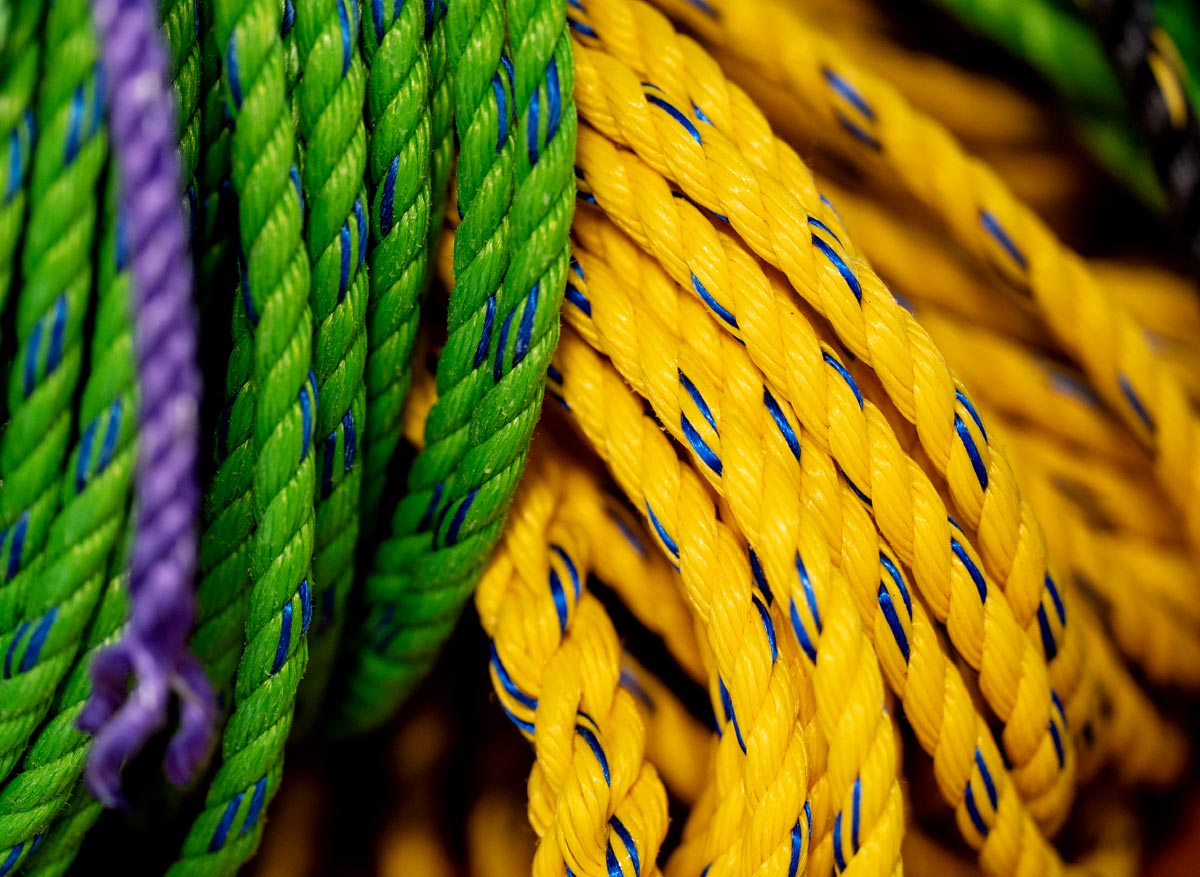
A close-up, detailed view of coiled brightly colored ropes in green and yellow with blue tracer threads, along with a strand of purple rope.
A bundle of rope.
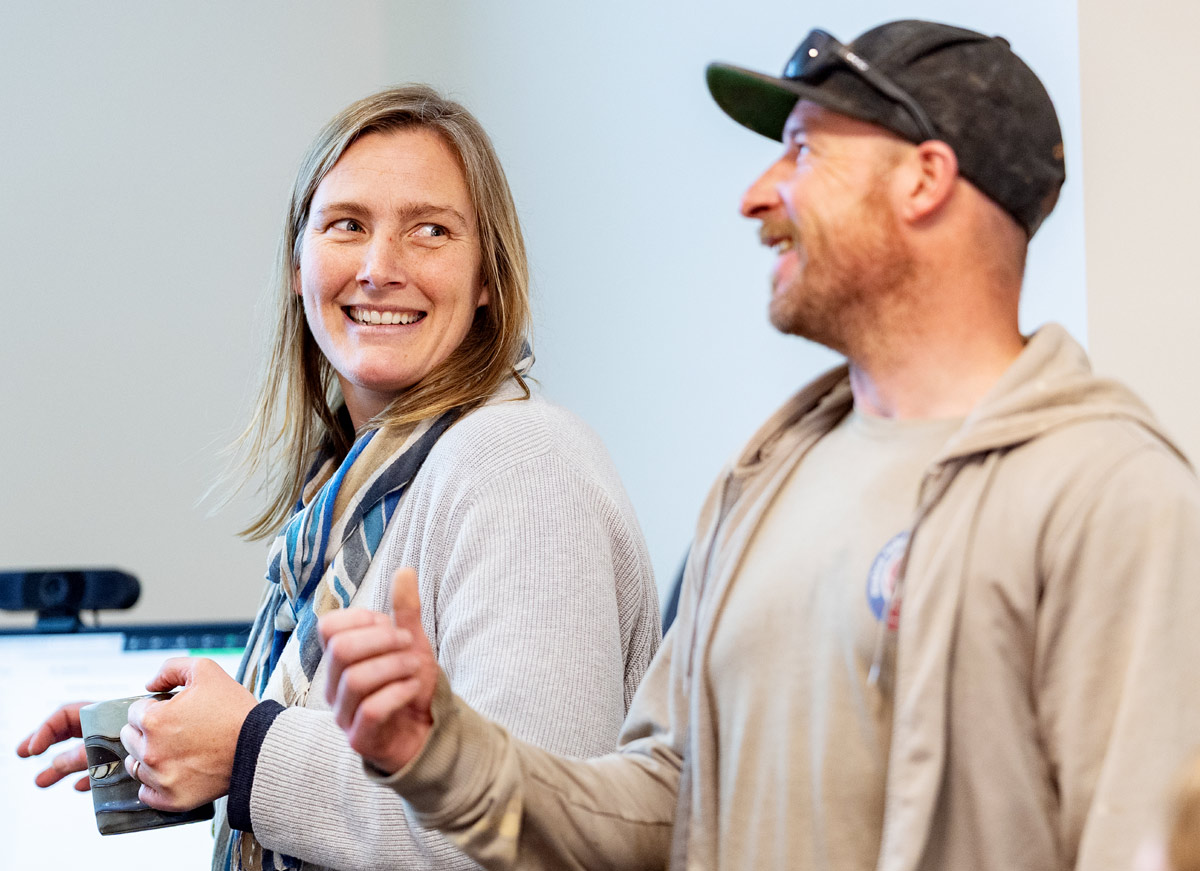
Cait Cleaver smiles while holding a mug next to her husband, Kris Koerber, who wears a baseball cap and speaks during a discussion.
Cleaver and her husband, Maine lobsterman Kris Koerber, talk about fishing during a campus discussion.
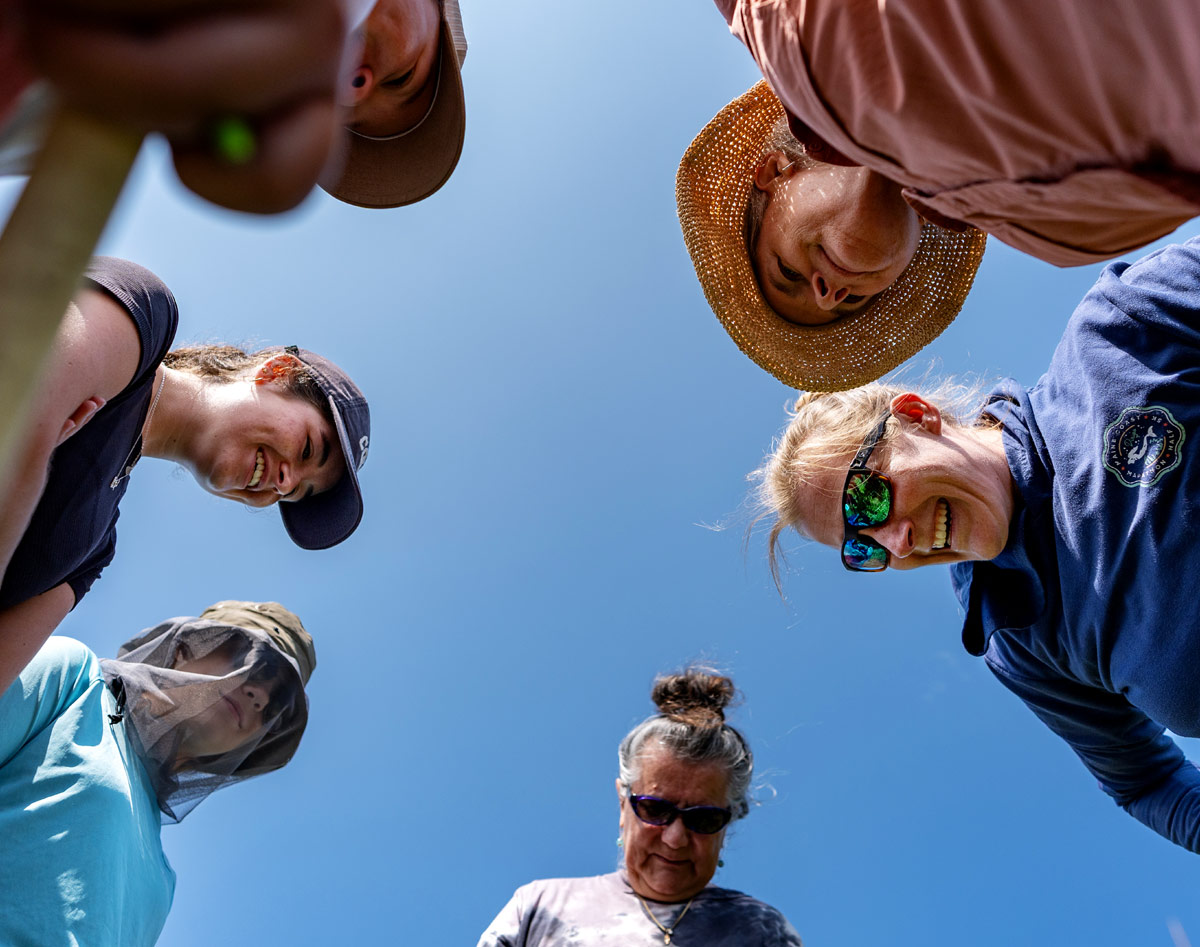
Low-angle view looking up at a circle of researchers and students, including Cait Cleaver, leaning inward against a clear blue sky.
Cait Cleaver (far right) works with students and other researchers to document the progress of sweetgrass plugs that were transplanted in the Sprague River salt marsh in Phippsburg. Others in the photo include Natalie Michelle, a member of the Penobscot Nation, Bev Johnson, professor of Earth and climate sciences at Bates College, Arthur Haines, research botanist for the Native Plant Trust, Patria Cabrera ’27, an environmental science and geology double major, Erin Young ’27, an environmental science and Spanish double major, and Lillian Blohm ’28, a biology and environmental science double major.
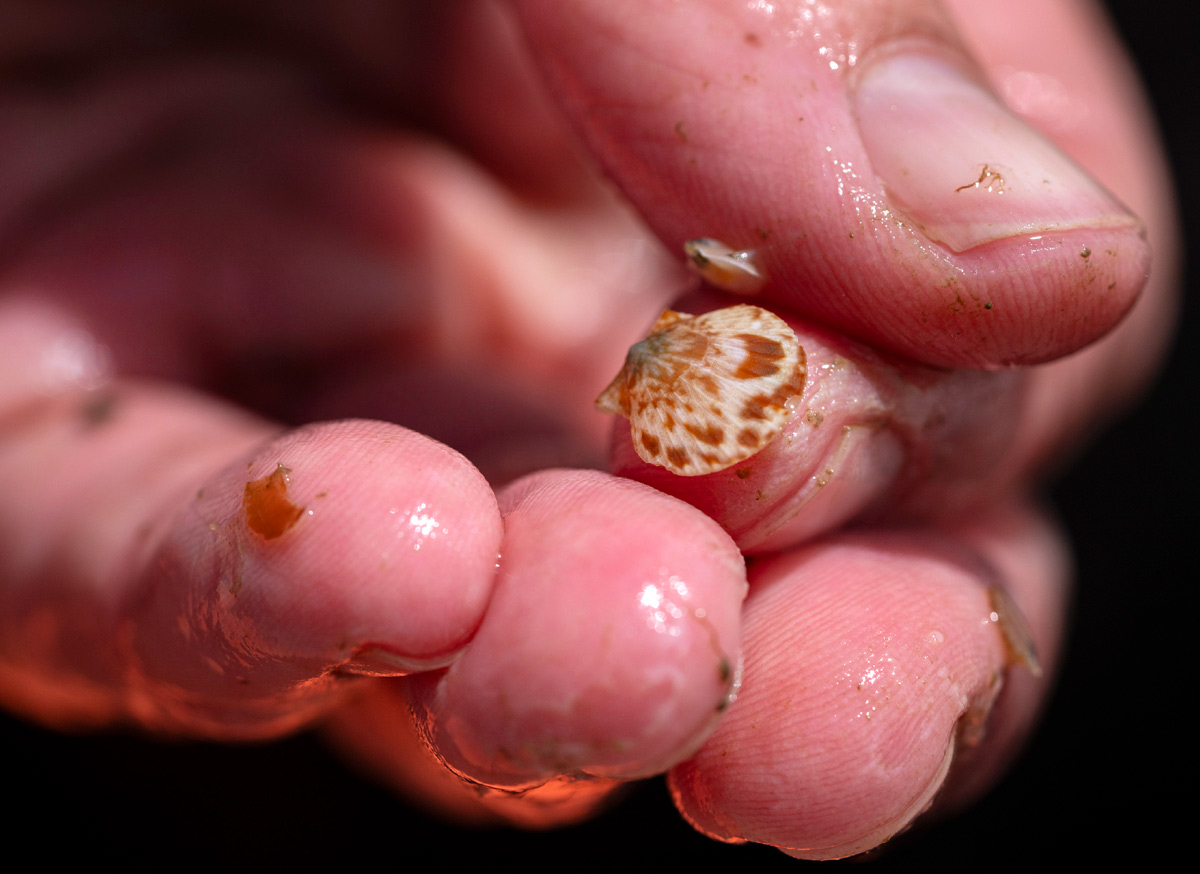
Extreme close-up of a person's wet fingers holding a tiny, speckled brown-and-white shell.
Watch Cait Cleaver and her collaborators, including Jessie Batchelder ’17, monitor ongoing oyster restoration sites as part of their work in the Basin Oyster Project in Phippsburg.