
Whistler and Colby—Together in London

Working with international partners, the Colby College Museum of Art explores the life and legacy of James McNeill Whistler, a staple of the museum’s Lunder Collection
STORY BY

Indiana Thompson ’18

PHOTOS BY

Ben Wheeler

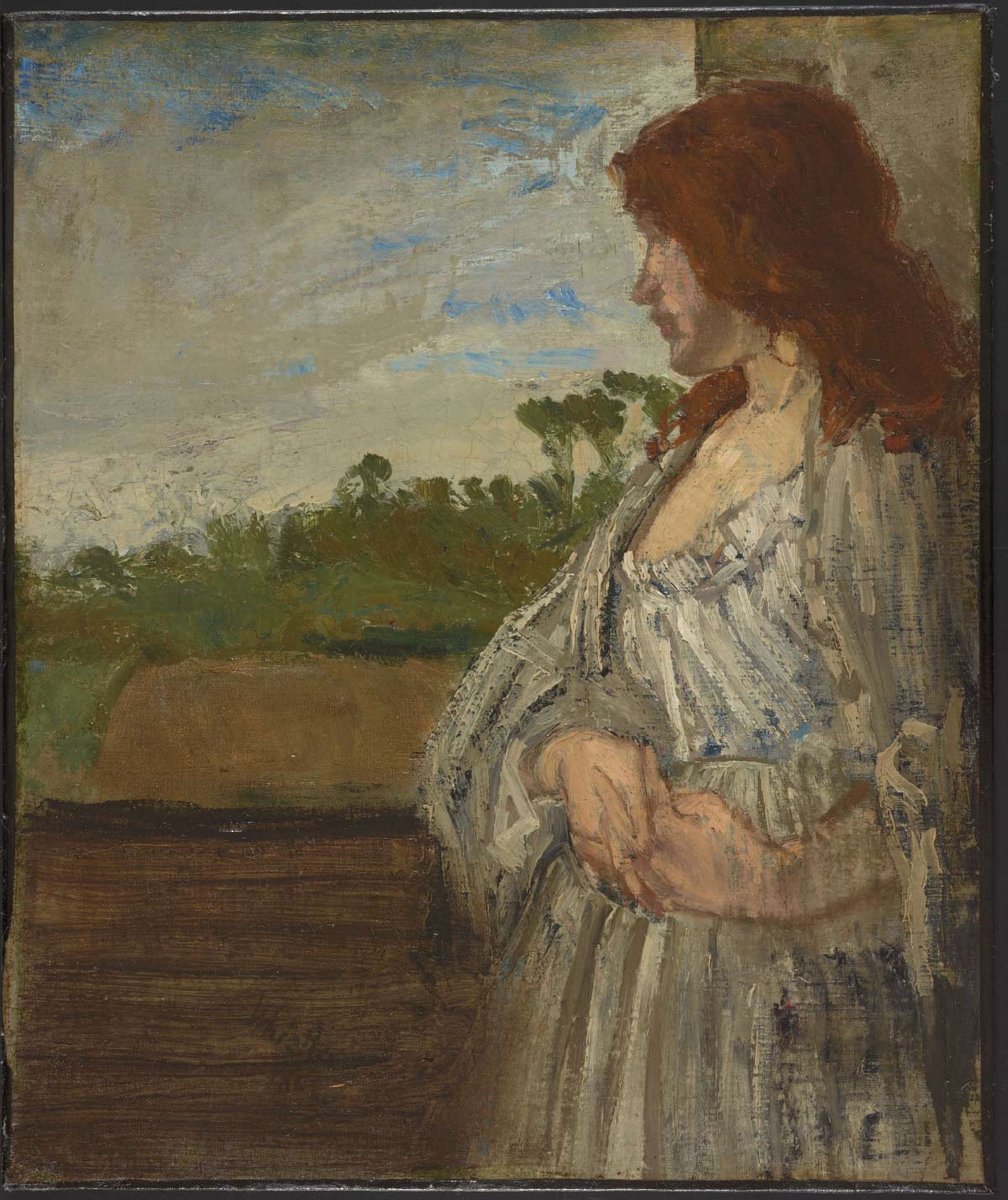
An oil painting of a profile view of a red-haired woman standing by a wooden balcony railing against an open green and sky landscape.
James McNeill Whistler, A White Note, 1862. Oil on canvas, 14 1/2 x 12 1/2 in. (36.8 x 31.7 cm). Colby College Museum of Art, The Lunder Collection, 2019.818.
The Colby College Museum of Art has long been an important resource for teaching and scholarship on campus, regionally, and nationally. Now, with support from the Lunder Foundation, a collaboration with Tate Britain in London will bring some of the most important works by American artist James McNeill Whistler from the Lunder Collection in Waterville to a global audience.

As part of a five-year initiative centered on the life and work of Whistler, the Colby Museum and Lunder Foundation are telling a new chapter of the Whistler story, using major exhibitions and hands-on research to better understand the complex world that shaped the artist.

Born in New England, Whistler (1834–1903) spent most of his life in Europe, depicting London and other cities with a style defined by mood, tonal harmony, and a subdued palette.
For more than 15 years, the Colby Museum has been at the forefront of scholarship and exhibitions that have increased understanding of Whistler. The Colby Museum’s internationally renowned Whistler holdings now exceed 400 works of art, most acquired as gifts from Peter H. Lunder ’56, D.F.A. ’98 and Life Trustee Paula Crane Lunder, D.F.A. ’98 through the Lunder Collection.

Central to this new phase of Whistler studies is the retrospective exhibition James McNeill Whistler, co-organized by Tate Britain in London, where it opened in May, and the Van Gogh Museum in Amsterdam, where it will travel in October 2026.
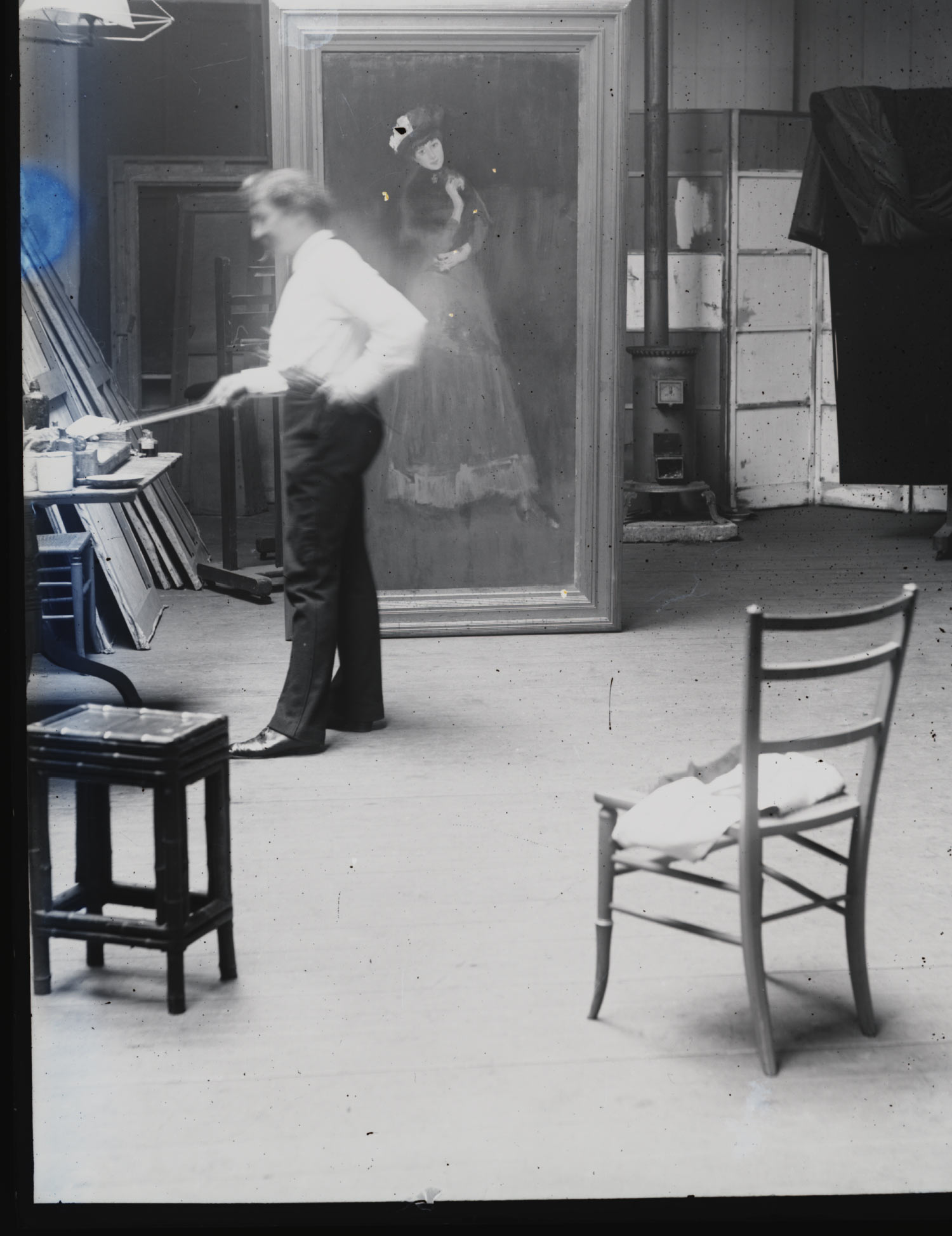
A black-and-white photo of a man painting a full-length portrait of a woman inside a spacious, rustic art studio with chairs and tables.
James McNeill Whistler, c. 1885. Courtesy of the Library of Congress. Born in Lowell, Mass., in 1834, James McNeill Whistler spent portions of his childhood in Russia and the United Kingdom. Whistler’s evocative depictions of the Thames River in London and the canals of Venice are often cited among the finest artworks of their time.
The Colby Museum is the third-largest contributor to the exhibition, alongside the Victoria & Albert Museum, lending more than a dozen works, including paintings, drawings, and prints from the Lunder Collection. In addition, Lunder Curator of Works on Paper and Whistler Studies Elisa Germán served as a curatorial advisor for the introductory section focused on Whistler’s transatlantic upbringing in America, Russia, and Europe, and contributed an essay to the exhibition publication.

In summer 2027, Germán will organize an exhibition, James McNeill Whistler: American Origins and Transatlantic Ambition, 1834–1865 at the Colby Museum. This exhibition will focus on Whistler’s formative years and artistic development within the United States and his first decade in Europe.

The exhibitions highlight and benefit from the collecting acumen of Peter and Paula Lunder, the impact of their philanthropy at Colby and beyond, and the ability of a deep collection to support new scholarship about an established artist, while centering the museum and Colby students at the heart of a global art conversation.

By combining the resources of leading museums, organizations, and individuals across the globe, this initiative will advance international scholarship on Whistler’s artistic practices and elevate Colby on an international stage, said Jacqueline Terrassa, the Carolyn Muzzy Director of the Colby College Museum of Art.
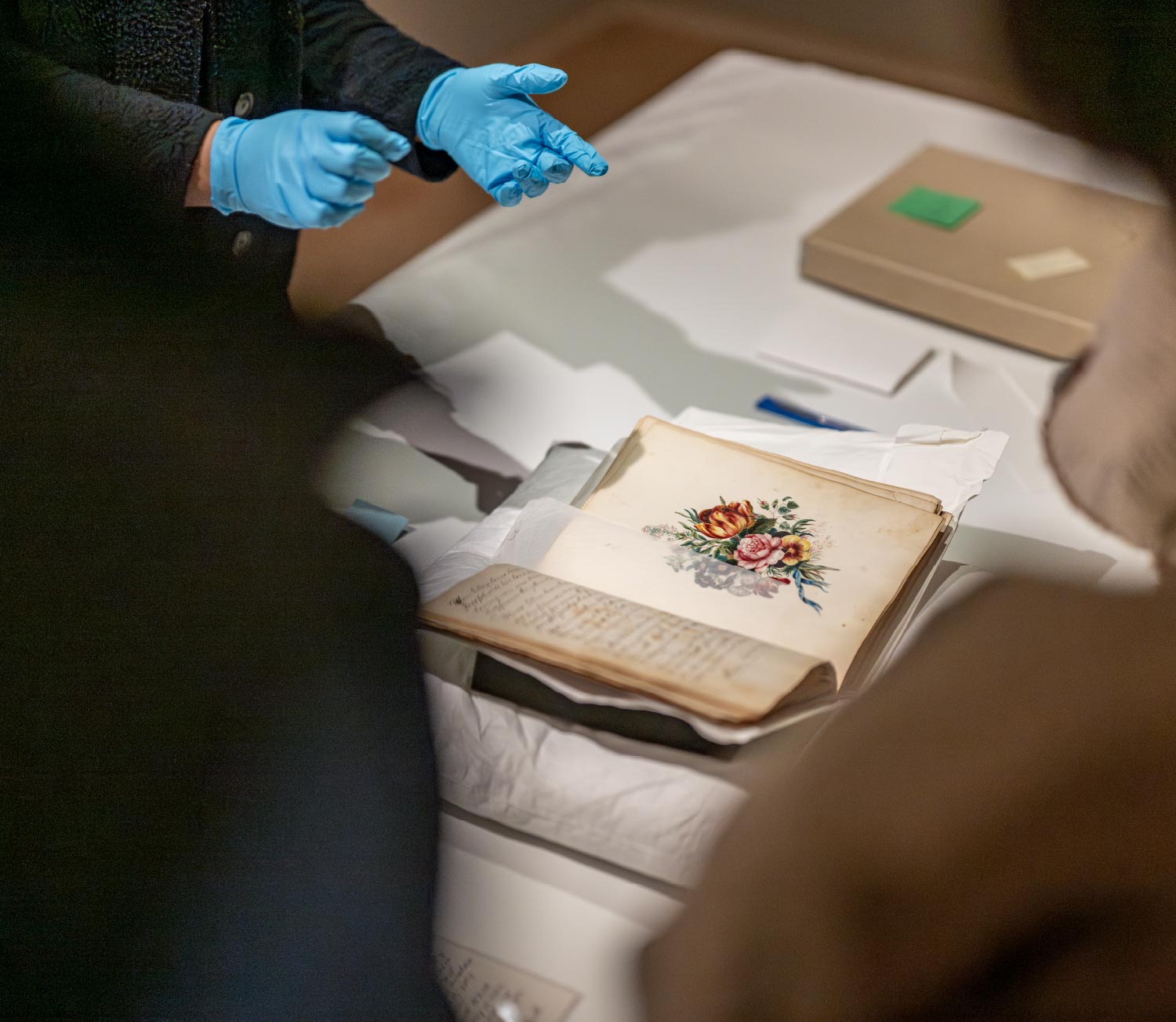
A close-up shot of a researcher wearing blue gloves examining an old book open to a page with a brightly colored flower illustration.
Wearing protective gloves, Elisa Germán, Lunder Curator of Works on Paper and Whistler Studies, shows students items from the Colby Museum of Art collection related to James McNeill Whistler during a Jan Plan course.
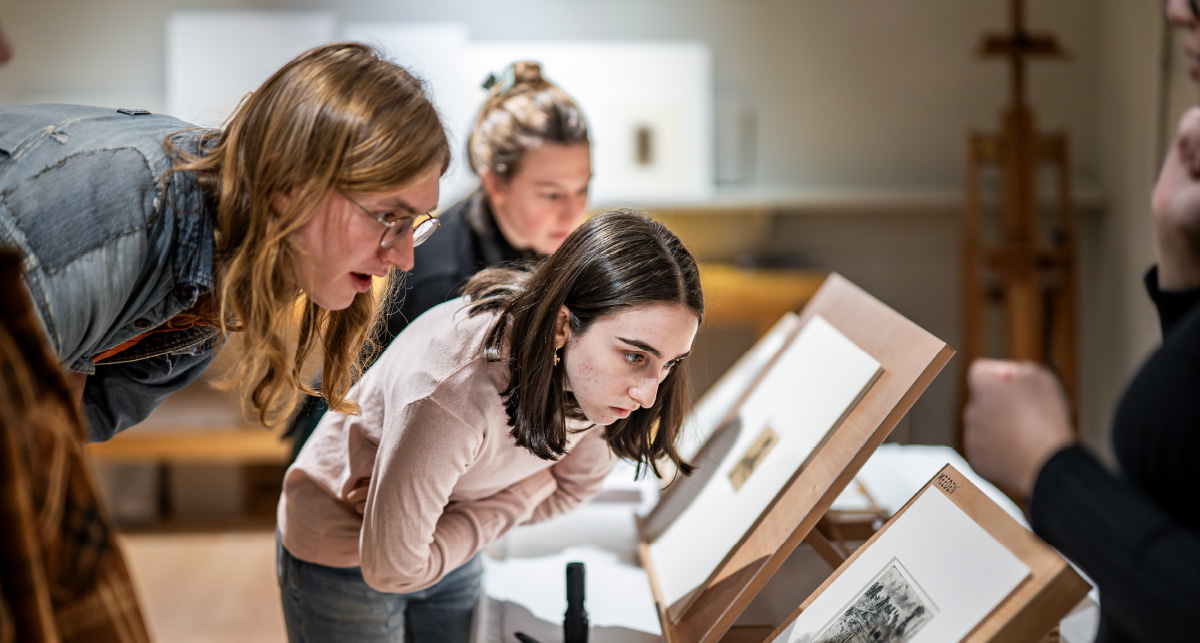
Two students lean forward in an art archive gallery to closely study matted black-and-white prints displayed on wooden tabletops.
Students look closely as they examine details of prints by James McNeill Whistler that are part of the Lunder Collection of the Colby College Museum of Art.
“This work will spur research and public appreciation of the art of James McNeill Whistler and demonstrate how, even when art history appears well-established, our understanding of art deepens and evolves when we ask new questions, apply different disciplinary methods, or bring new perspectives to the work of an artist,” Terrassa said. “This is especially relevant at Colby, where we teach students to engage in this process of inquiry and discovery, and at a museum with extensive holdings of artworks by single artists, including Whistler.”

The Colby Museum’s longstanding relationship with Whistler began in 2007, when the Lunders promised their initial gift of the Lunder Collection of American and European art. The Lunder Collection has grown to more than 1,800 objects through additional gifts and now includes almost 400 Whistler prints, paintings, drawings, and related archival materials, representing a comprehensive survey of Whistler’s career across media.

Many of these are recent acquisitions, underscoring the Lunders’ continued commitment to expanding and refining the collection. As a result, the Colby Museum now holds one of the world’s foremost Whistler collections.

For many, Whistler’s legacy is inseparable from the highly detailed, atmospheric paintings and etchings that established him as a leading figure in 19th-century art and a master printmaker. His evocative post-Impressionist depictions of the Thames River in London and the canals of Venice are often cited among the finest artworks of their time, reflecting both technical precision and a refined sensitivity to mood and light.

A Private College for the Public Good

Economic Impact

97-percent placement rate six months after commencement among the Class of 2025 graduates in their desired career or graduate school
Yet, these achievements were shaped by formative experiences far from Europe. Born in Lowell, Mass., in 1834, Whistler spent portions of his childhood abroad in Russia and Europe before returning to the United States, where he spent his adolescence in Connecticut, New York, and the mid-Atlantic region. There, he developed an early interest in art, producing sketches of everyday life during the antebellum and Industrial periods that reveal the beginnings of his enduring commitment to a new form of realism.

Colby’s Growing Expertise

As the Whistler collection at Colby has grown, so too has Colby’s expertise in Whistler’s world. In 2010, the Lunder Foundation established the Lunder Consortium for Whistler Studies, a partnership among the Colby Museum, the Art Institute of Chicago, the National Museum of Asian Art (formerly the Freer Gallery of Art), and the Hunterian, University of Glasgow, all with leading collections of artwork by Whistler. The consortium promoted scholarly research, publications, programs, and technical studies, and the Colby Museum organized and participated in several Whistler exhibitions.

Since joining the museum in 2023, Germán has focused on the Whistler collection, both deepening attention to the artist himself and expanding interpretation to encompass Whistler’s wider circle of collaborators, influences, and contemporaries. By thinking more expansively and inclusively about the artist’s broader artistic, cultural, and sociopolitical networks, she has elevated the works, significantly broadening their impact and reach, and recontextualized their relevance for diverse audiences.
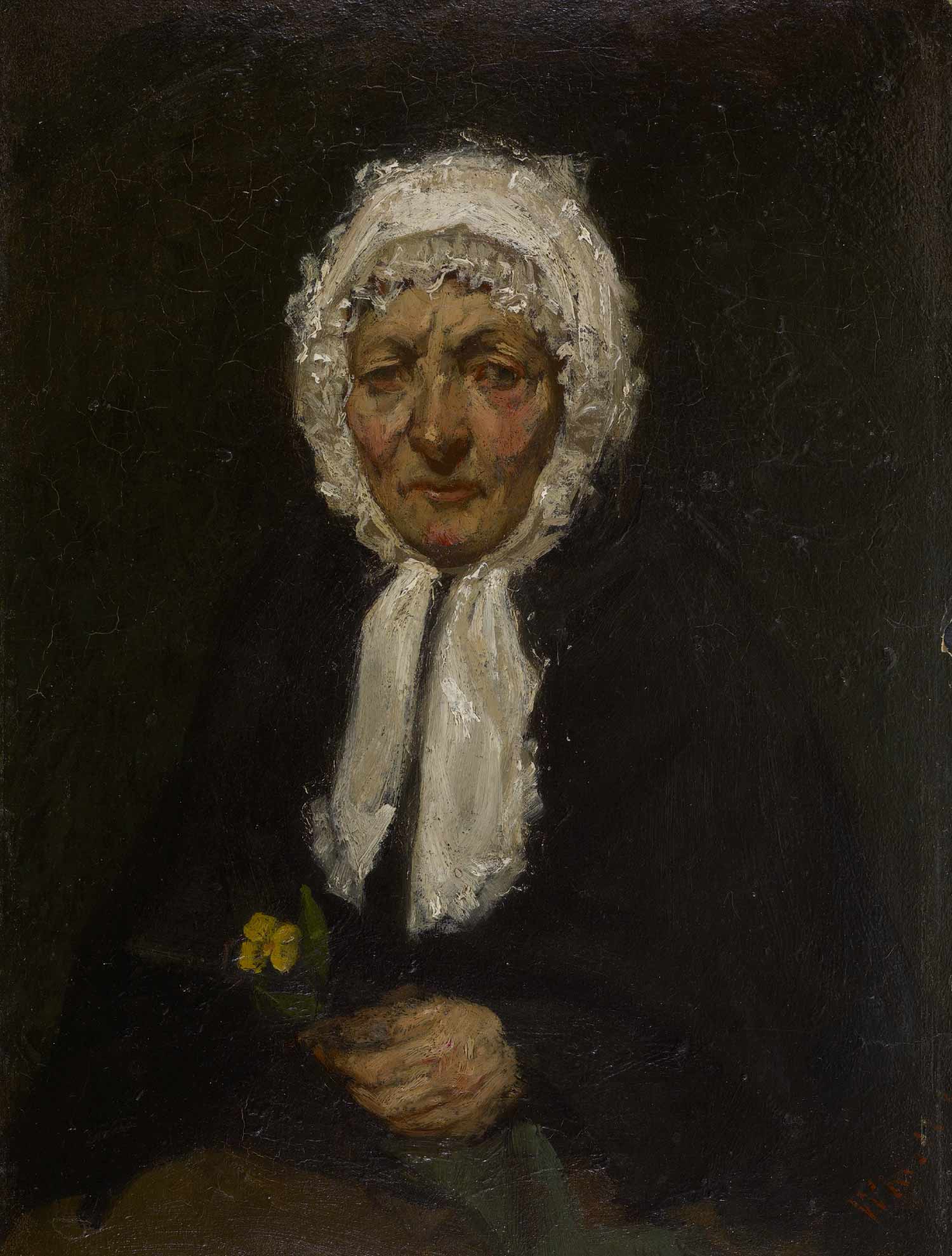
An oil portrait painting of an elderly woman wearing a white bonnet and dark coat, holding a small yellow flower against a dark backdrop.
James McNeill Whistler, La Mère Gérard, c. 1858–59. Oil on board. 12 x 8 5/8 in. (30 x 22 cm). Colby College Museum of Art, The Lunder Collection; 2013.295.
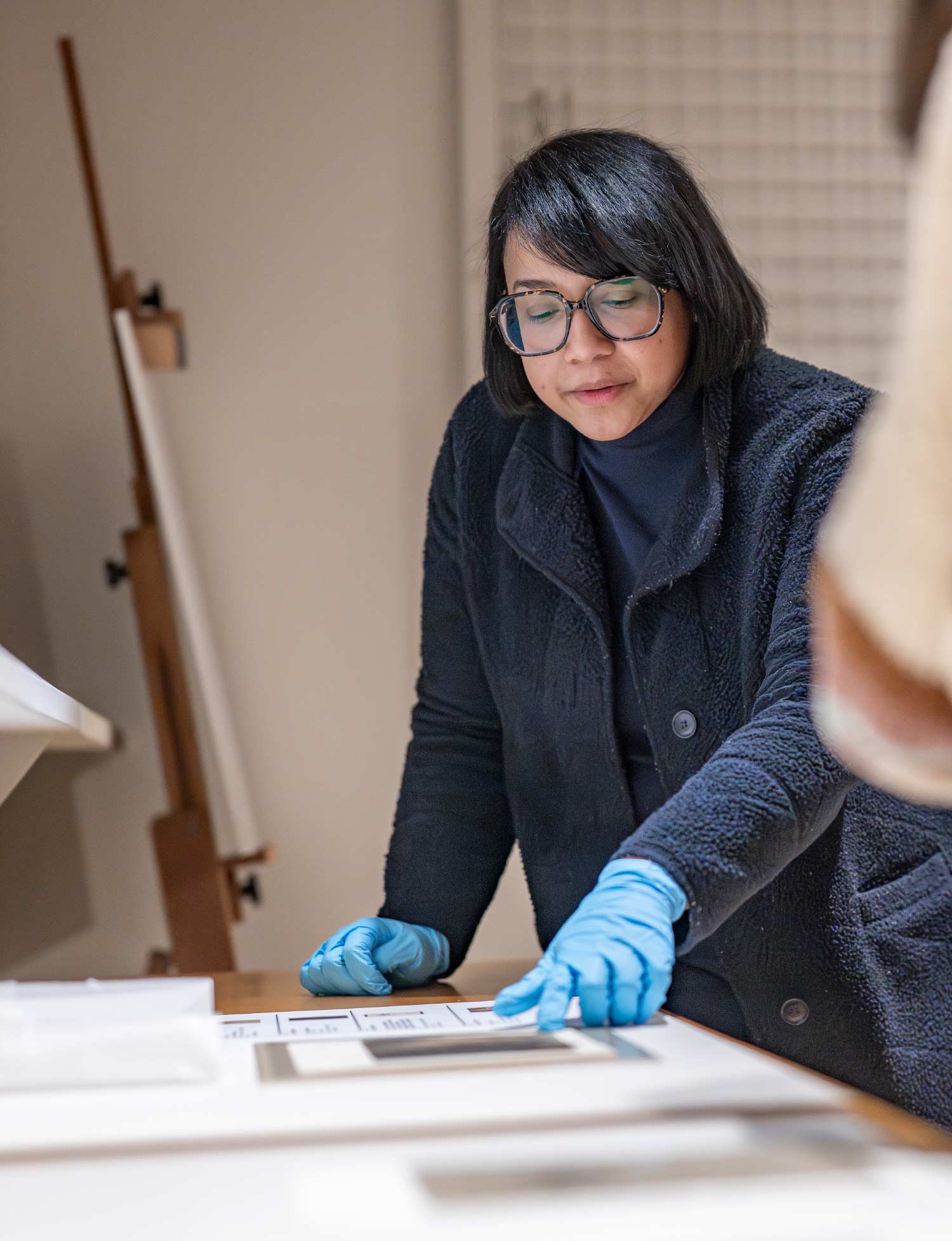
An archivist wearing glasses and blue protective gloves carefully inspects historic documents resting on a clean white surface.
Elisa Germán served as a curatorial advisor for the retrospective exhibition James McNeill Whistler, co-organized by Tate Britain in London and the Van Gogh Museum in Amsterdam.
The Tate Britain collaboration enriches Colby’s academic commitment to Whistler and marks a new phase of institutional partnerships. A Jan Plan course taught by Germán, Rediscovering James McNeill Whistler, which examined the artist’s early life and artistic formation, was developed in anticipation of the 2027 Colby Museum exhibition and its curatorial contributions to the Tate Britain retrospective.

The collaboration also enables Colby to participate in the art conservation project known as “Whistler’s Finish,” launched in preparation for the London exhibition and in partnership with Tate Britain, the Colby Museum, and the University of Glasgow, funded by the Lunder Foundation. “By focusing on the treatment of Whistler’s early and mid-career oil paintings, such as La Mère Gérard and A White Note from the Lunder Collection, researchers are gaining new insights into the artist’s innovative methods and how he achieved his signature ethereal aesthetic,” Germán said.

Over the course of the conservation process, the Tate hosted virtual convenings that resulted in 22 papers by international experts exploring Whistler’s techniques and the conservation of his works across oil, watercolor, pastel, print, and frames. A special edition of the Tate Papers published online this fall, centering on Whistler’s technique, process, and finish, will document the conservation project’s research. A four-part film series emerging from the Whistler conservation project will pair individual paintings with conservator-led narration, offering behind-the-scenes insight into restoration work while exploring the artist’s techniques and legacy.

Embarking on this new phase of Whistler studies, the Colby Museum will foster a renewed, globally engaged understanding of the artist’s life and work for a new century, Germán said.

“This initiative represents an extraordinary opportunity to deepen our understanding of Whistler’s art through a lens that is both global and grounded in local engagement,” Germán said. “By integrating cutting-edge conservation research with student learning, public scholarship, and international collaboration, we aim to reshape how Whistler is studied and taught.”

In addition, the Lunder Institute for American Art, established in 2017, partnered with Tate Britain for the 2026 iteration of the Lunder Institute @ series of public programs. Organized by the Lunder Institute, this initiative brings together artists, curators, and educators from leading museums to reflect on the history, future, and evolution of American art. This year’s cycle will culminate in October when representatives from each of the 2026 venues—the Yale Center for British Art in New Haven, the Royal Academy of Arts in London, and the Peggy Guggenheim Collection in Venice, in addition to the Tate Britain—convene at Colby.

For the Lunders, bringing an international art community together—on Mayflower Hill and beyond—to study and celebrate the legacy of a central figure in their collection feels purposeful and rewarding, for Colby students now and in the future, as well as for art lovers on both sides of the Atlantic.

“It is especially meaningful to see works from Colby’s collection shared with major European museums as part of an international art conversation.”
– Peter and Paula Lunder
“We have always believed in Colby College and the Colby College Museum of Art, which inspired our initial gift in 2007 and our continued support. It is especially meaningful to see works from Colby’s collection shared with major European museums as part of an international art conversation,” the Lunders said in a statement.

“We are deeply grateful for the leadership of Colby President David A. Greene, Jacqueline Terrassa, and Elisa Germán, as well as the partnership of Tate Britain. We hope this project will benefit visitors abroad as well as Colby’s students, community, and the state of Maine, and we are thrilled to see it come to fruition.”

A Private College for the Public Good

Economic Impact

Colby has increased its workforce by nearly 12 percent since 2019 and paid $485 million in direct payroll.